takingTeam performance
takingTeam performance
takingTeam performance
Code of Conduct
Code of Conduct
Excellent case collection


Tips for safely enjoying Kyoto in the summer
~Enjoy a cool Kyoto with a caring heart~
Taking action to protect yourself will help protect the city of Kyoto.
Why is heatstroke prevention so important in Kyoto?
The Dangers of Summer in Kyoto: By the Numbers
The Kyoto Basin, surrounded by mountains on three sides, has poor ventilation, making it extremely hot and humid in the summer, like a sauna. As the graph shows, the number of people transported to hospitals due to heatstroke increases sharply immediately after the end of the rainy season (mid-July to August), when the body is not yet accustomed to the heat . Tourists, in particular, are at a higher risk of heatstroke due to their frequent outdoor activities.
⚠️ When engaging in outdoor activities on days with temperatures above 31℃ or high humidity, extreme caution is necessary.

*When the temperature reaches 31℃, it is classified as "extreme caution" or "danger" according to heatstroke prevention guidelines. Especially on humid days, sweat does not evaporate easily and heat tends to build up in the body, so caution is necessary even indoors.

Let's protect local healthcare through thoughtful actions
Preventing heatstroke not only protects your own life, but also directly reduces the burden on local emergency medical infrastructure. Protecting an environment where local residents can receive medical care with peace of mind is one of the behavioral standards of Kyoto tourism ethics .

Ambulances will transport twice as many people as today by 2040!
Due to the effects of climate change and an aging population, it is predicted that the number of heatstroke patients transported to hospitals in major metropolitan areas will double by 2040. Awareness and preventative measures taken by each person will help protect Kyoto's future.

×

Let's work together to ensure Kyoto is safe this summer.
The Kyoto City Tourism Association and Otsuka Pharmaceutical Co., Ltd. are collaborating to address social issues such as raising awareness about heatstroke prevention and reducing the burden on local medical infrastructure.
To help you enjoy a comfortable summer in Kyoto, we will be distributing heat-relief items at specially opened locations for the "Kyoto Summer Trip" (excluding some areas) and at the Kyoto General Tourist Information Center, among other places.
We'll be distributing items to help you cope with the heat!
"Kyoto Tourism Morals" and participating businesses are working together to ensure that you can enjoy a comfortable summer in Kyoto.
We will be distributing "heat relief goods" such as fans, electrolyte drinks, and cooling towels.


Fan (image)

Distribution location
Distribution period
Saturday, August 1st to Sunday, August 30th, 2026
Handouts
Fan, electrolyte drink (distributed from August 1st to 16th),
Cooling towel (distributed from August 20th to 30th)

Distribution location
Distribution period
August 1st (Sat) - August 16th (Sun), 2026
*Excludes the former Mitsui family Shimogamo villa, locations participating in the "Kyoto Summer Night Journey" (nighttime illumination) event, and visits to Kodai-ji Temple after 5:00 PM.
Handouts
Fan, cold towel
*Distributed only to visitors

Distribution location
Distribution period
July 1st (Wednesday) - September 30th (Wednesday), 2026
Handouts
Cold towel
*Distributed only to tour participants
Distribution location
Distribution period
July 1st (Wednesday) - September 30th (Wednesday), 2026
Handouts
Fan, electrolyte drink, cold towel
*Distributed only to tour participants

Distribution location
Distribution period
July 1st (Wednesday) - September 30th (Wednesday), 2026
Handouts
Fan, electrolyte drink, cold towel
*Distributed only to tour participants
*Distribution will end once supplies run out, even if it is before the end of the distribution period.
*This event may be subject to change or cancellation without notice due to unavoidable circumstances.
Don't miss it!
Dangerous signs of heatstroke
If you experience any of the following symptoms, immediately move to a cool place, replenish fluids and electrolytes, and take a rest.

Dizziness
Feeling lightheaded or experiencing facial flushing

Headache
Throbbing pain

Nausea
Feeling sick and lethargic

Dehydration
Excessive sweating
Or not sweating at all
The correct way to stay hydrated
Why are ion drinks chosen as a measure against heatstroke?
To prevent heatstroke, you need a beverage that contains ions (electrolytes), not just plain water.
Ionic composition similar to sweat

Sweat contains not only water but also ions (electrolytes) such as sodium. Since ion drinks have a very similar ionic composition to sweat, they can smoothly replenish lost components.
Long-lasting moisture retention

Even after some time has passed since consumption, more water remains in the body after drinking an ion drink than after drinking plain water. It helps maintain body hydration for a longer period of time.
Fast absorption speed

Because its composition is similar to body fluids, it is absorbed into the body much faster and replenished more effectively than drinking plain water, quickly hydrating a dehydrated body.
Preventing "voluntary dehydration"

Drinking only water or tea after sweating dilutes the electrolytes in your body. To prevent this decrease in concentration, the brain suppresses thirst even when you're dehydrated, leading to "voluntary dehydration." Ion drinks can prevent this.
Information provided by: Otsuka Pharmaceutical Co., Ltd.
Four steps to travel safely

STEP 1
Frequent hydration and salt intake
Replenish fluids and electrolytes simultaneously with electrolyte drinks or other beverages before you feel thirsty. Please take advantage of the free water refill stations .

STEP 2
Taking the time to cool off
Take breaks at cooling shelters or cafes during the day, and avoid overexertion. Sightseeing in the morning or evening is also recommended.

STEP 3
Travel light
Heavy luggage drains your energy and contributes to overcrowding on city buses. Use a luggage delivery service and enjoy sightseeing unencumbered.

STEP 4
Use parasols and hats
Simply blocking direct sunlight can significantly lower your perceived temperature. We encourage you to experience Japan's parasol culture.
Websites providing helpful information on heatstroke prevention
Experiences that help you escape the heat
Seeking coolness: A summer tradition in Kyoto

Exorcising evil spirits with the power of water
Foot-dipping ritual
At Shimogamo Shrine and Kitano Tenmangu Shrine, you can participate in the "Ashitsuke Shinji" ritual. This traditional Kyoto summer event involves immersing yourself up to your knees in the cool, clear stream within the shrine grounds, praying for good health and protection from illness. The refreshing water gently cools your overheated body.

Enjoy a meal in a prime waterside location!
Noryo-yuka (riverside dining)
One of Kyoto's summer traditions is "Noryo-yuka," a culture of enjoying meals while cooling off on tatami mats set up on or by the river. You can experience this along the Kamo River, as well as in the naturally rich areas of Kibune, Takao, and Takagamine. Enjoying a meal while listening to the gentle murmur of the river and being cooled by nature is a truly special experience.

Nighttime illumination
Kyoto Summer Special Openings
Summer is best enjoyed after the sun goes down. The interior of normally closed temples takes on an even more solemn atmosphere at night. Following their success last year, we are once again organizing "Summer Evening Illuminations." Enjoy cooling off in the evening breeze from dusk until nightfall.
Sightseeing outside of peak times: a smart way to avoid the heat
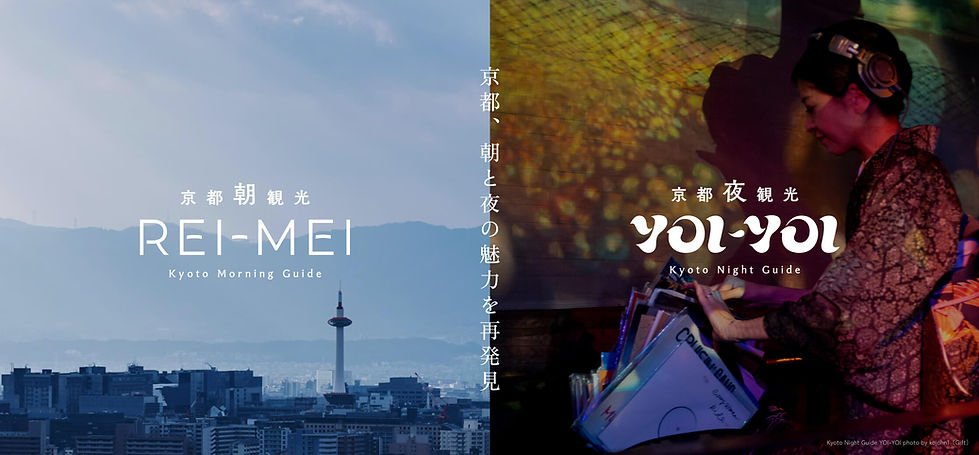
Avoiding the intense heat and crowds during peak daytime hours (11 am to 3 pm) and shifting your activities to the relatively cooler mornings and evenings is one of the keys to comfortably enjoying a summer in Kyoto.
"Kyoto Morning Sightseeing REI-MEI" provides information on temples and shrines that offer early morning viewing and cafes where you can enjoy breakfast, while "Kyoto Night Sightseeing YOI-YOI" offers information on special nighttime viewings and cultural experiences .
What are "Kyoto Guidelines"?

Kyoto boasts a history spanning 1200 years. The "Kyoto Guidelines for Sustainable Tourism" were created to protect this beautiful landscape, traditional culture, and the lives of its citizens, and to pass them on to future generations.
We ask that tourists not only visit the sights but also act with consideration for the local community. Taking your trash with you, not trespassing on private roads, avoiding crowded public transportation, and protecting yourself from heatstroke are all excellent ways to show respect for the community .
Other Useful Links


